



- .... - ... .., .... | ..:..
- ....... | ..
- ... | ..
- Intranet Login
Tuesday, 30 June 2026
From Awareness to Action: MDA and UNCP Strengthen Community Preparedness Through the Disaster-Resilient Village (DESTANA) Program in Boneposi and Tolajuk
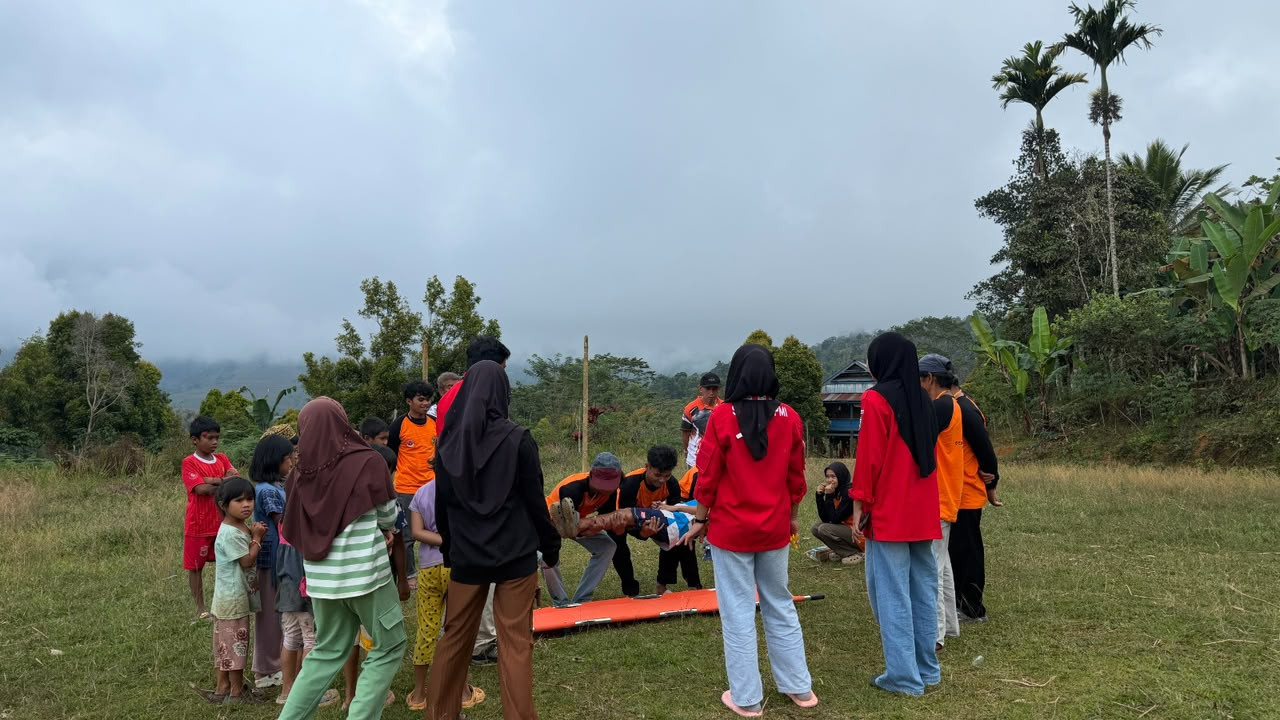
The commitment to strengthening community disaster preparedness in the Latimojong area continues to be implemented in stages. Following the establishment of Disaster-Resilient Villages (DESTANA), PT Masmindo Dwi Area (MDA), in collaboration with Cokroaminoto Palopo University (UNCP), has carried out the next phase of the program by strengthening DESTANA institutions and conducting disaster preparedness simulations in Boneposi and Tolajuk Villages.
The initiative is part of the Village Safety Program, one of the key pillars of the Village Protection Program (Jaga Desa), which was developed based on community aspirations conveyed through FORDES MATAPPA. Rather than ending with awareness campaigns, the program is designed to equip communities with the capacity, systems, and practical mechanisms needed to respond effectively during emergencies.
Unlike previous activities, which focused on introducing disaster risks and establishing DESTANA organizations, this phase provided residents with hands-on experience through disaster response simulations. Activities included defining the roles and responsibilities of DESTANA members, developing coordination mechanisms, identifying assembly points and temporary evacuation shelters, mapping evacuation routes, installing evacuation signage, and practicing emergency communication procedures as part of community preparedness exercises.
The program involved the Luwu Regency Government through the Regional Disaster Management Agency (BPBD), the Luwu Regency Social Affairs Office, the Indonesian Red Cross (PMI), village governments, FORDES MATAPPA, the Center for Community Development and Service (PUSPENA) of Cokroaminoto Palopo University, and residents from both villages. This multi-stakeholder collaboration plays a vital role in building a disaster preparedness system that communities can independently implement when disasters occur.
MDA's Mine Technical Manager (KTT), Mustafa Ibrahim, emphasized that community preparedness cannot be built through theory alone but requires practical training and simulations so that every stakeholder understands their roles and responsibilities during emergencies.
"Our goal is not only to establish DESTANA organizations but also to ensure they are fully prepared to function when needed. That is why we actively involve community members in disaster simulations—from identifying evacuation routes and determining assembly points and temporary shelters to strengthening coordination among village stakeholders. We hope that when an emergency occurs, people will know exactly what to do because they have already practiced the response mechanisms together," said Mustafa.
Dr. Ichwan Muis, Head of PUSPENA at Cokroaminoto Palopo University, explained that simulations are a critical stage in ensuring that the disaster preparedness system functions effectively in practice.
"Our objective is not merely to establish DESTANA organizations but to ensure that every stakeholder in the village understands their roles and responsibilities during emergencies. Simulations provide the most effective learning experience because people do not only learn the theory—they also experience firsthand the processes of coordination, evacuation, and decision-making in real-life scenarios," he said.
Boneposi Village Head M. Hamka, S.Pd., welcomed the initiative, noting that the approach not only increased public awareness but also gave residents valuable practical experience in responding to potential disasters.
"Through these simulations, community members gain a clear understanding of what to do during a disaster—from identifying evacuation routes and assembly points to understanding each person's role in supporting the evacuation process. This is an invaluable asset for our community," he said.
Similarly, Tolajuk Village Head Badarudin stated that strengthening the DESTANA organization provides a stronger foundation for building community resilience.
"We highly appreciate this collaboration involving the government, academia, the private sector, and the community. DESTANA is more than just an organization—it helps foster a culture of mutual cooperation, coordination, and preparedness that we hope will continue to grow within our communities," he said.
The DESTANA strengthening program was previously implemented in Bonelemo and Ulusalu Villages in 2025. In 2026, the program expanded to Boneposi and Tolajuk Villages through a series of awareness sessions, institutional strengthening activities, disaster preparedness simulations, and the installation of evacuation signs as part of efforts to enhance village-level disaster mitigation systems.
Moving forward, the program will be gradually expanded to other villages across Latimojong District based on risk assessments and field surveys. This initiative reflects MDA's long-term commitment to strengthening community capacity and reinforcing Disaster-Resilient Village institutions throughout the Latimojong region.
Source: masmindo.co.id
Read the full story
Sitemap